
Artificial Intelligence
Exploring the frontiers of intelligent systems and their applications.
Machine Learning
The Machine Learning track provides students with the tools and techniques for developing systems that improve their performance through data. Students study supervised and unsupervised learning, deep learning, reinforcement learning, and statistical modeling. Coursework emphasizes practical implementation using modern frameworks as well as theoretical underpinnings of learning algorithms. Machine learning has wide-ranging applications in speech recognition, predictive analytics, personalized medicine, cybersecurity, and artificial intelligence systems. By mastering these methods, graduates will be prepared to contribute to the rapid advancement of technologies that rely on intelligent data-driven decision-making.
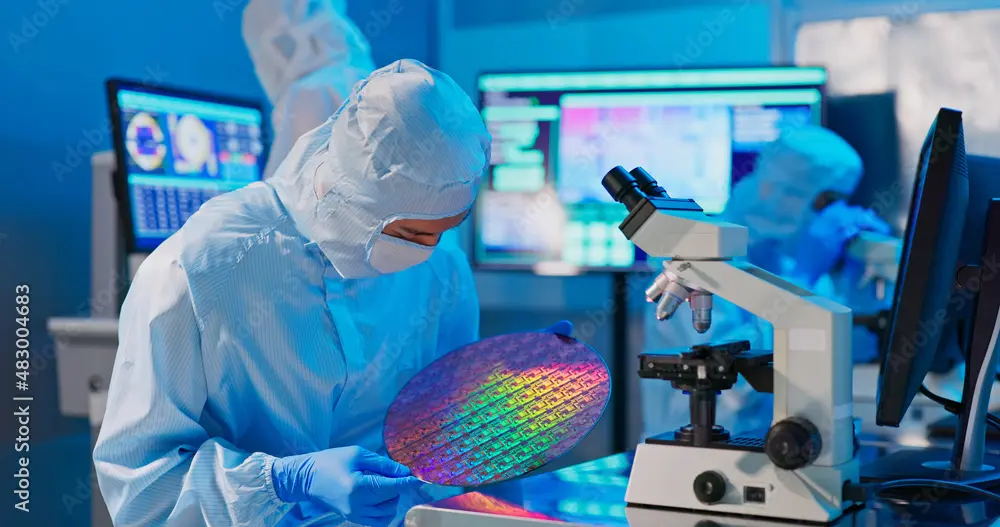
Semi-Conductors
The Semiconductors track explores the physics, materials, and engineering of semiconductor devices that power modern electronics. Students study carrier transport, fabrication techniques, device structures, and the design of integrated circuits. Coursework integrates theory with laboratory experiences in device characterization and materials science. Semiconductors form the backbone of computing, communications, renewable energy, and emerging technologies like quantum computing. This emphasis prepares students to contribute to advances in microelectronics, power electronics, and photonics, ensuring they have the expertise to innovate in one of the most critical fields driving global technological progress.
Software Engineering
The Software Engineering track provides students with the principles and practices for developing large-scale, reliable, and maintainable software systems. Students study the full software development lifecycle, including requirements gathering, design, implementation, testing, and deployment. Emphasis is placed on agile methodologies, software architecture, version control, and team collaboration, preparing students to build solutions that meet both technical and user needs. This track is highly versatile, equipping graduates with skills that apply across industries such as technology, finance, healthcare, and defense. With a strong foundation in both programming and engineering design, students will be prepared to create innovative applications, optimize system performance, and adapt to evolving software tools and practices in the professional world.

Hardware Acceleration
The Hardware Acceleration track focuses on designing systems that offload computationally intensive tasks from general-purpose processors to specialized hardware. Students study GPUs, FPGAs, and custom architectures that optimize performance for applications such as machine learning, data analytics, and signal processing. Coursework emphasizes system-level integration, performance trade-offs, and energy efficiency. Hardware acceleration is increasingly vital in industries ranging from cloud computing and autonomous systems to biomedical imaging and financial technology. Graduates of this emphasis will be equipped to design high-performance systems that meet the growing demand for speed and efficiency in data-driven applications.