
Biotechnology
Exploring the intersection of biology and technology to develop innovative solutions.

Biomedical Engineering
The Biomedical Engineering track integrates engineering principles with medical sciences to develop technologies that advance healthcare. Students study biomechanics, medical imaging, biomaterials, prosthetics, and diagnostic devices. Coursework emphasizes both design and regulatory considerations in creating safe and effective medical technologies. Applications of biomedical engineering range from medical devices and implants to digital health technologies and rehabilitation systems. Graduates will be equipped to collaborate with clinicians, scientists, and engineers to design innovations that improve patient care and medical outcomes.
3D Printing
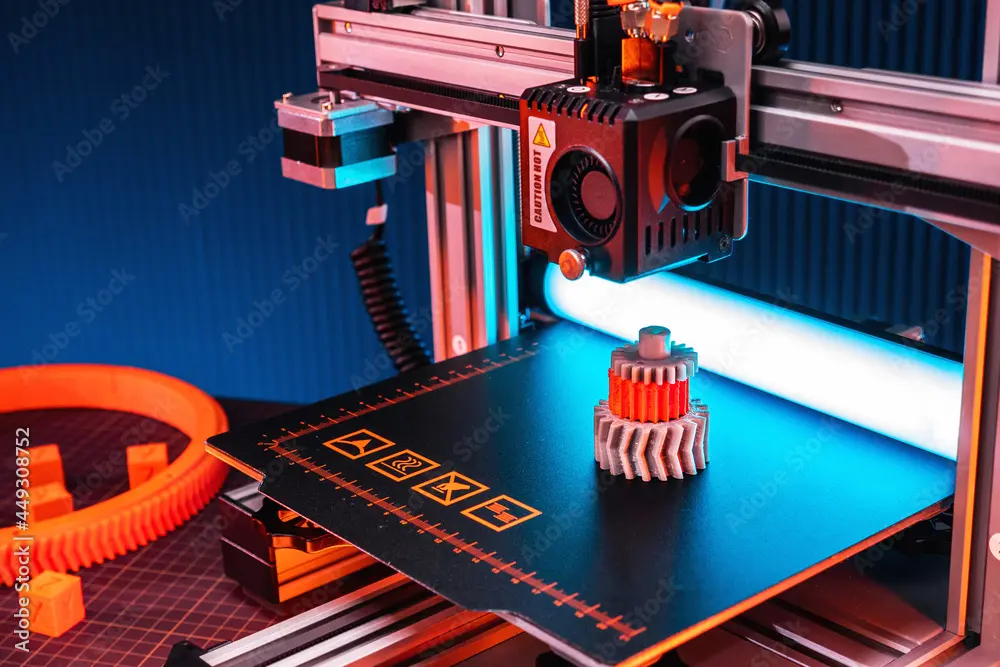
The 3D Printing track explores additive manufacturing technologies that enable rapid prototyping and custom fabrication. Students study materials, printing techniques, computer-aided design (CAD), and optimization methods for creating three-dimensional structures. Coursework emphasizes both technical design and the transformative applications of 3D printing. Applications include biomedical implants, aerospace components, consumer products, and industrial manufacturing. As 3D printing continues to revolutionize product development and supply chains, graduates will be prepared to harness this technology to create innovative, efficient, and customizable solutions.

Microfluidics
The Microfluidics track focuses on the design and application of systems that manipulate small volumes of fluids at the microscale. Students study fluid dynamics, lab-on-chip technologies, sensors, and biomedical applications. Coursework emphasizes both the fundamental science of microscale fluid behavior and its practical engineering applications. Microfluidic systems are used in diagnostics, drug discovery, chemical analysis, and environmental monitoring. With applications growing in both healthcare and industry, graduates of this emphasis will be equipped to design innovative microscale technologies that enable faster, cheaper, and more precise testing and experimentation.

Materials
The Materials track explores the properties, design, and applications of materials that form the foundation of modern technology. Students study metals, polymers, ceramics, composites, and nanomaterials, focusing on their structure, performance, and fabrication processes. Coursework emphasizes the relationship between material properties and their use in engineering applications, from strength and durability to conductivity and sustainability. Applications of materials science span nearly every industry, including electronics, aerospace, biomedical engineering, renewable energy, and advanced manufacturing. As innovation in materials continues to drive progress in technology, graduates will be prepared to design and apply advanced materials that enable safer, stronger, and more efficient products for the future.